
 Software
8 min read
POS Software for Retail in Pakistan: What Actually Matters
What a Pakistani retail or restaurant POS must do that cloud-only imports ignore — offline billing, tax invoices, multi-branch stock and Urdu receipts.
Read MoreSection 2(43A) catches far more shops than owners expect. Meeting any one test is enough — including the electricity bill.

Written by a software engineer, not a tax adviser. Statutory references were checked against FBR's own published FAQs and the Sales Tax Act, 1990 on this date. WordbitX is not an FBR licensed integrator.
Most owners assume Tier-1 means a national chain or a big brand outlet, so they never check. The definition in section 2(43A) of the Sales Tax Act, 1990 is far wider than that, and the wording matters: you qualify by meeting any one of the tests, not all of them.
The tests are: operating as a unit of a national or international chain of stores; operating in an air-conditioned shopping mall, plaza or centre, with kiosks excluded; a cumulative electricity bill exceeding Rs 1,200,000 over the preceding twelve months; being a wholesaler-cum-retailer engaged in bulk import and supply of consumer goods; a shop measuring one thousand square feet or more; having acquired a point of sale for accepting debit or credit card payments; and withholding tax under sections 236G or 236H of the Income Tax Ordinance above the notified threshold.
The electricity test catches the most people. Rs 1,200,000 across twelve months is roughly Rs 100,000 a month — which an air-conditioned shop in Lahore or Karachi can reach without being large by any other measure. The threshold was raised from Rs 600,000, so owners who checked years ago may have the wrong figure in their head.
Once you qualify, integration under section 3(9A) is not the only obligation. You also need sales tax registration under section 14, proper electronic tax invoices under section 23, tax charged at the rate applicable to the goods, and the monthly return under section 26. The software has to support all of that, not just the transmission.
Separately, and often missed: restaurants, cafés and snack bars fall under their own chapter of the Sales Tax Rules, 2006 and are required to integrate whether or not they meet any Tier-1 test. If you run a food business, the Tier-1 question is beside the point.
Rules, thresholds and dates in this area change with almost every finance act and SRO. Treat this page as an engineering brief, not tax advice, and confirm your own position with your tax adviser or FBR directly before acting.
Definitions do not ship products. These service pages explain the engagement.
POS, inventory and branch reporting that keep selling when the internet drops.
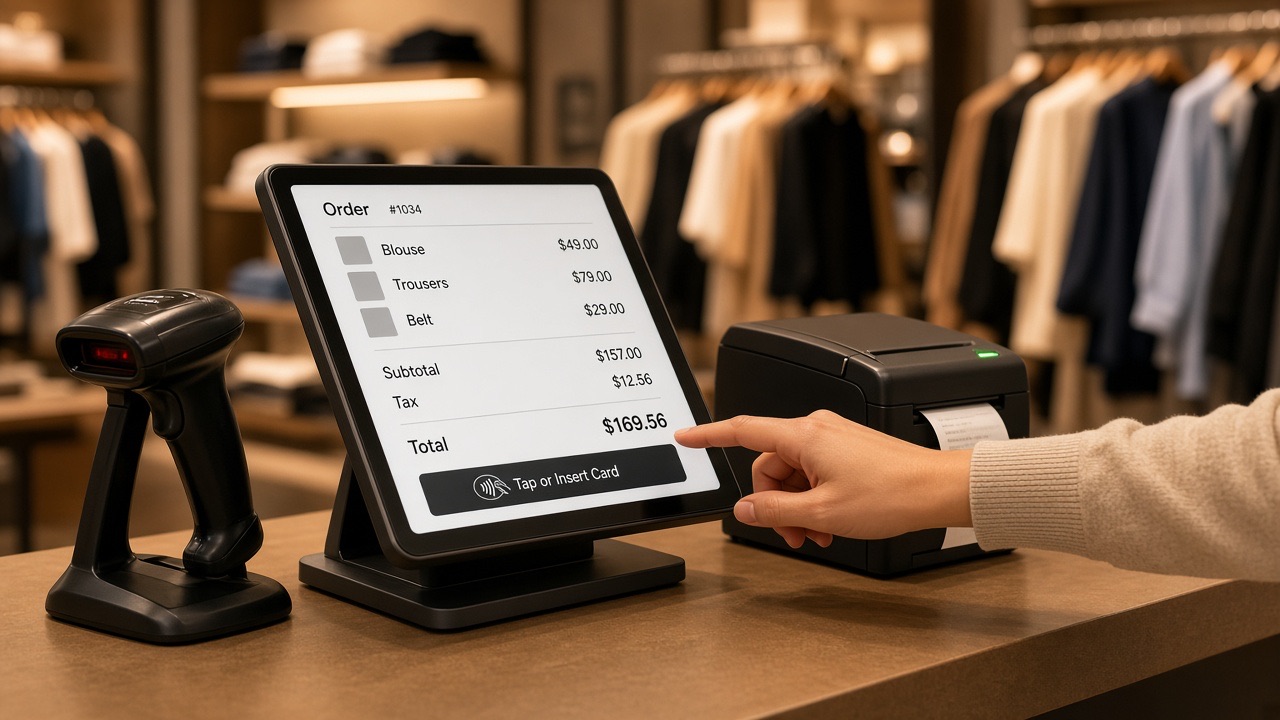
SoftwareWhat a Pakistani retail or restaurant POS must do that cloud-only imports ignore — offline billing, tax invoices, multi-branch stock and Urdu receipts.
Read MoreRetailWhy restaurant POS fails here — power cuts, KOT, deals, delivery apps — and what a counter system must do before you buy screens.
Read MoreNo — any one. The statute uses the words 'any one or more', so a single trigger such as a card machine or an electricity bill over Rs 1,200,000 across twelve months makes you a Tier-1 retailer on its own.
A cumulative bill exceeding Rs 1,200,000 during the immediately preceding twelve consecutive months, under section 2(43A)(c). That is about Rs 100,000 a month. It was raised from Rs 600,000, so older guidance you may have read is out of date.
Acquiring a point of sale for accepting debit or credit card payments is one of the listed tests, so on its face yes, even for a standalone shop. Because this one surprises people most often, confirm your specific position with your tax adviser.
Restaurants are covered by their own chapter of the Sales Tax Rules, 2006, which requires integration whether or not they fall inside the Tier-1 definition. For a food business the practical answer is that integration applies either way.
Yes. The tests are rolling — the electricity test looks at the preceding twelve months — so a business can move into Tier-1 simply because tariffs rose or it added air conditioning. Review it annually.
Real-time invoice transmission to FBR, an IRN and a QR code on every receipt. What that means for the system you already run.
Real-time reporting from the till, an FBR invoice number and QR code on every receipt, and a counter that keeps selling when the line drops.
Restaurants, cafés and snack bars have their own rule. Dine-in, takeaway, delivery and aggregator orders all have to reconcile.
Tell us the workflow. We will recommend a package, a custom build, or neither.
Typical reply time: same business day. We work with clients across Pakistan, the UK, US, UAE and Australia.
