
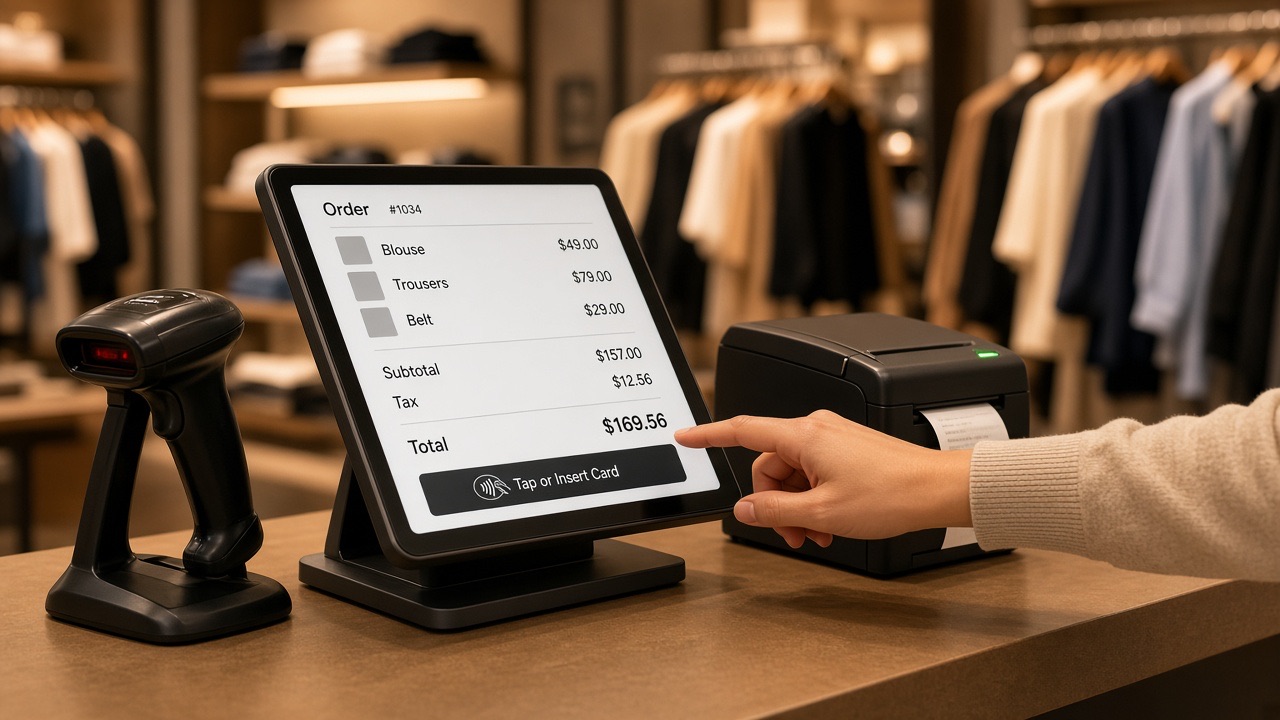
A restaurant POS that dies when WAPDA drops is not a POS. It is a donation to the cloud vendor. Pakistani counters need local billing first, sync later — the way we build POS software.
Must-haves on day one
- Offline bills and a reprint when the printer jam clears.
- KOT to kitchen/bar with modifiers (no onion, extra shot).
- Deals and happy-hour prices that cashiers cannot silently override without a log.
- Waiter and table status if you are not counter-only.
- A day-end that matches cash in the drawer.
Integrations people forget
Foodpanda / Foodics-style channels, JazzCash, and inventory for recipe-level recipe waste. If the POS and the store room disagree, theft and spoilage hide in the gap.
FBR integration applies to restaurants either way
Restaurant owners spend a lot of energy working out whether they are Tier-1. For a food business it is largely beside the point: restaurants, cafés and snack bars are addressed by their own chapter of the Sales Tax Rules, 2006, which requires POS integration regardless of the Tier-1 tests. The practical consequence is that aggregator and delivery orders cannot sit on a separate tablet — every channel has to land in one invoice series or the reported figure will never match the real one. More in FBR restaurant POS.
Hardware is the cheap part
A thermal printer and a cheap Android station are fine. The expensive part is training the 11pm shift and a rollback when a “free update” breaks KOT.
Walk us through one busy Friday night. We will say if a package is enough — contact.
Need help applying this?
WordbitX turns guidance like this into delivered work — scoped, built and supported. Email info@wordbitx.pk or send your brief through the contact form.
