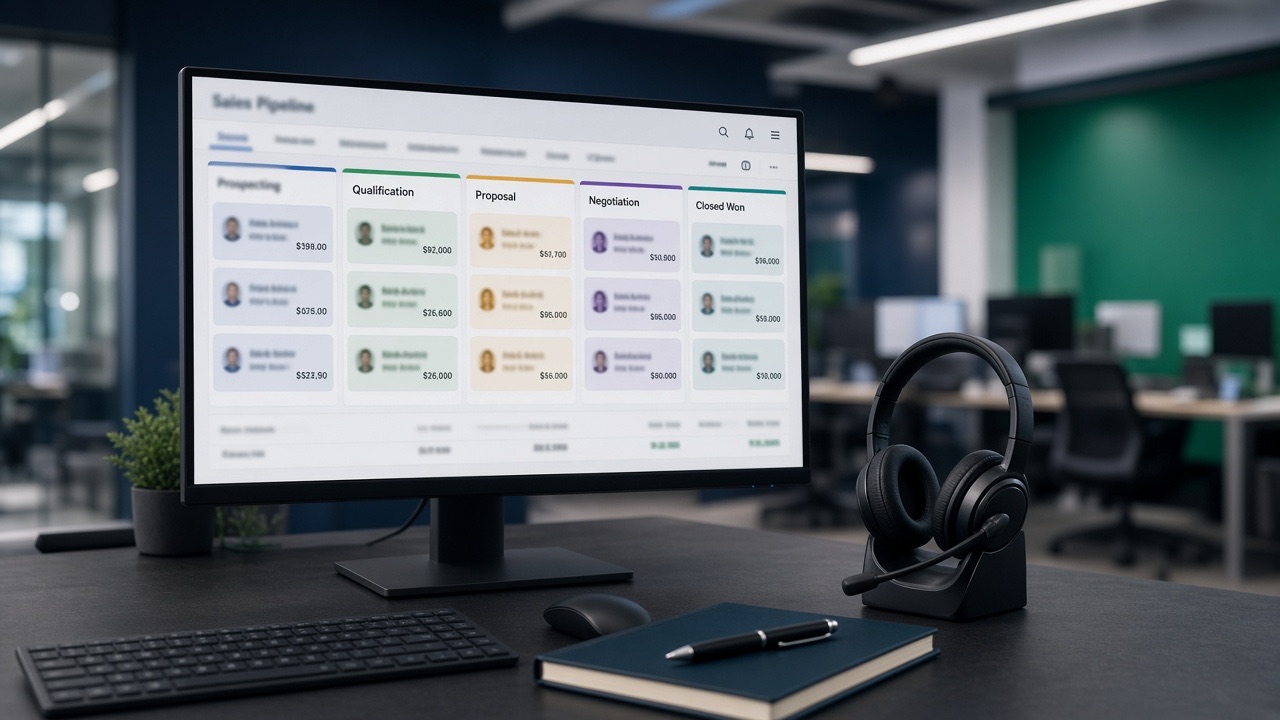
A CRM is supposed to stop deals dying in someone's inbox. If your team still runs follow-ups from memory, WhatsApp and a colour-coded sheet, you do not have a CRM — you have theatre.
Symptoms that say "the current tool is failing"
- Two people call the same lead because ownership is not enforced.
- Quotes look different depending on who wrote them.
- When a salesperson leaves, their pipeline knowledge leaves too.
- You pay per seat for a platform your team uses as an address book.
- The workflow that makes you competitive is the one the SaaS cannot express.
Configure first, build second
Most sales pipelines are well served by an existing CRM, configured properly. Custom CRM development earns its keep when your objects are unusual — plot files, instalment plans, clinic visits, wholesale price lists — or when licence fees have outgrown the value.
What a first custom CRM release should include
- 1Leads with a source, an owner and a next action.
- 2A pipeline with stages your team actually uses.
- 3Reminders that fire without someone remembering to set them.
- 4Quote or booking documents generated from the same record.
- 5A report the founder looks at every Monday.
If you are unsure whether to configure or build, an operational audit answers it in a couple of weeks. Book a discovery call.
Need help applying this?
WordbitX turns guidance like this into delivered work — scoped, built and supported. Email info@wordbitxtech.com or send your brief through the contact form.